
1982 Colnago Super
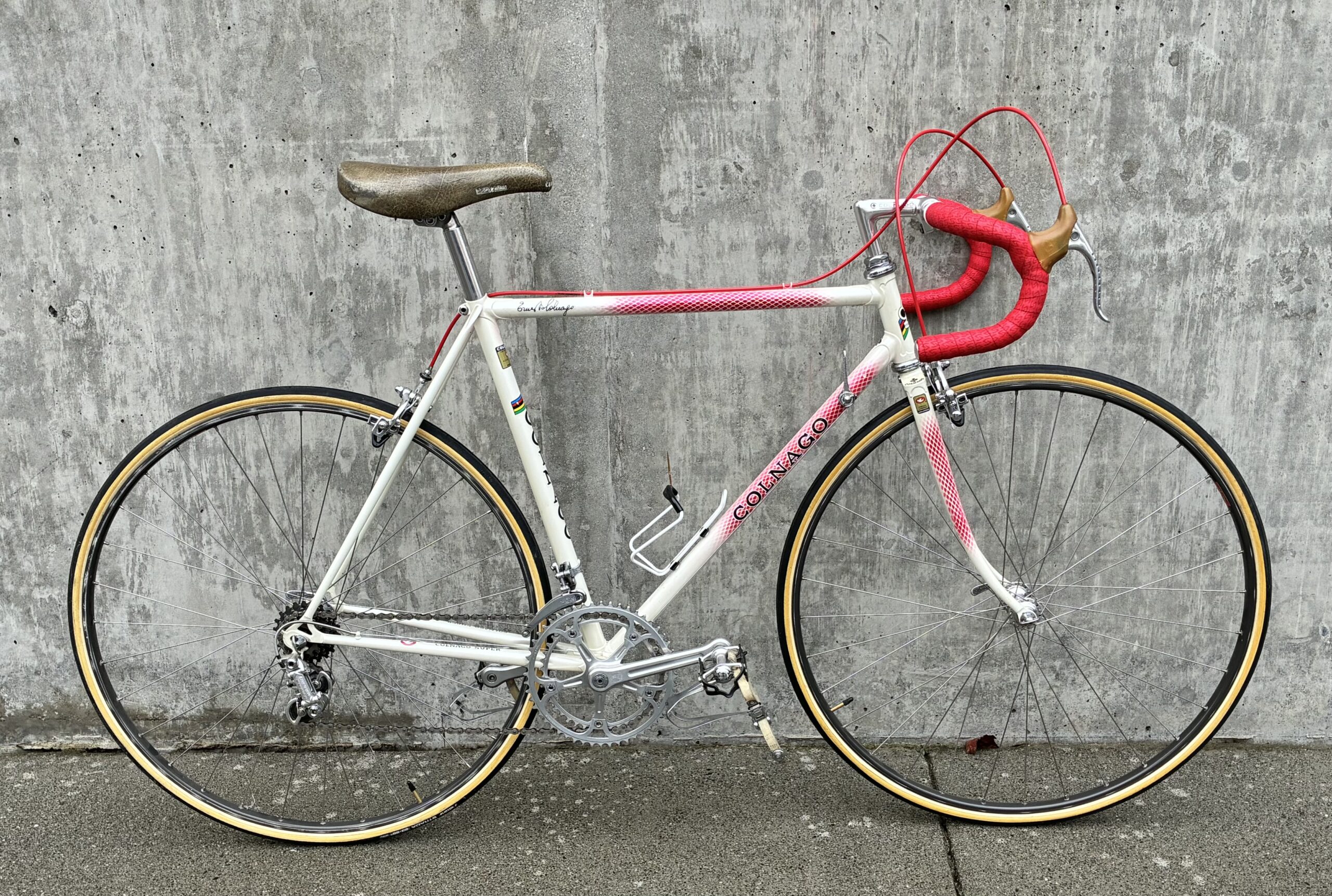
1982 Colnago Super
Super! Another Colnago Super. At the risk of boring you, our wonderful museum visitor, I must expound once again on the virtues of the Colnago Super. It was, after all, a bike that served the great Eddy Merckx. If Eddy’s wins weren’t impressive enough, my friend Tom had one, and I thought he was pretty fast too. The Super was a bike model that was crafted so perfectly from the outset that it served as standard bearer for racing bike construction from 1970 to almost 1995.
The ingredients were good. Like a lot of builders, Colnago made these bikes out of Columbus SL steel tubes. The components varied, but Campagnolo Nuovo Record and later Campy Super Record parts were probably fitted to 95 percent of these bikes with Cinelli or 3T handlebars, Cinelli or Selle Italia saddles, and it was always sew-up tubular tires glued onto the wheels.
Ernesto Colnago decided all of the tubing lengths, the angles, and the wall thicknesses. He crafted his own forks, and the front end is where a lot of the magic happened. Colnago forks handle beautifully. Road vibration was kept in check, there was no shudder under hard braking, and fast cornering felt enabled, not discouraged.
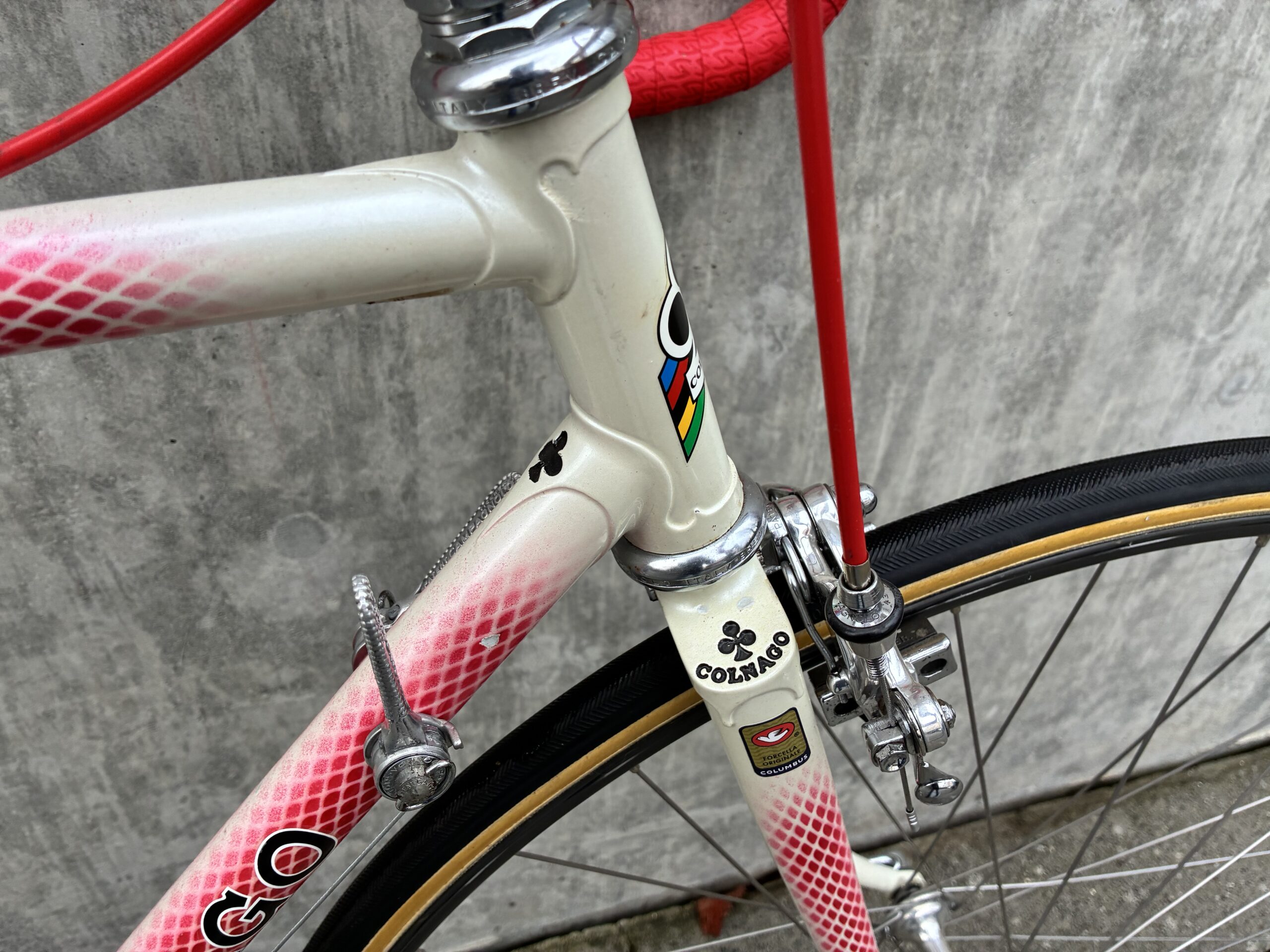
Fork and lug details
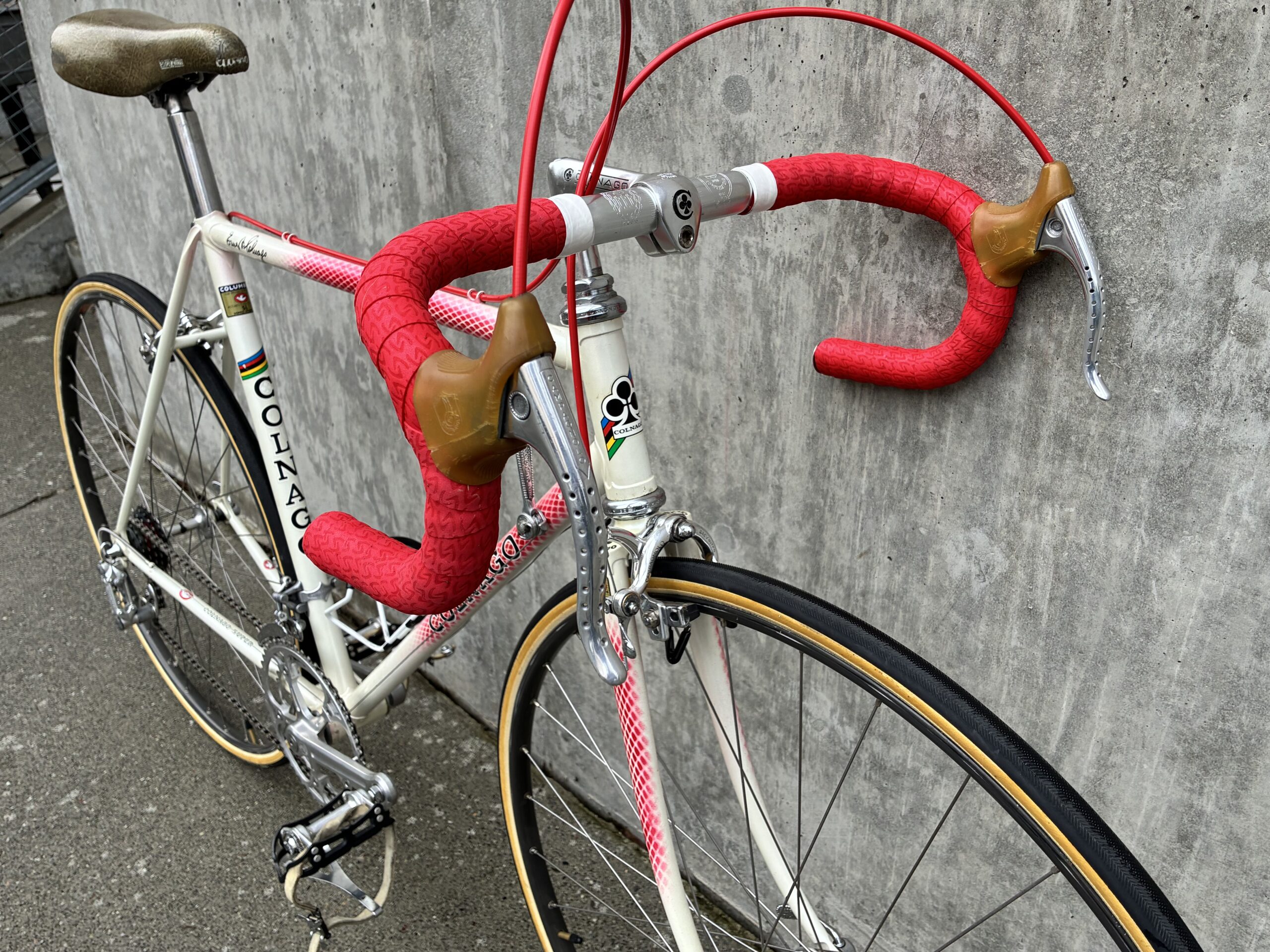
Super!
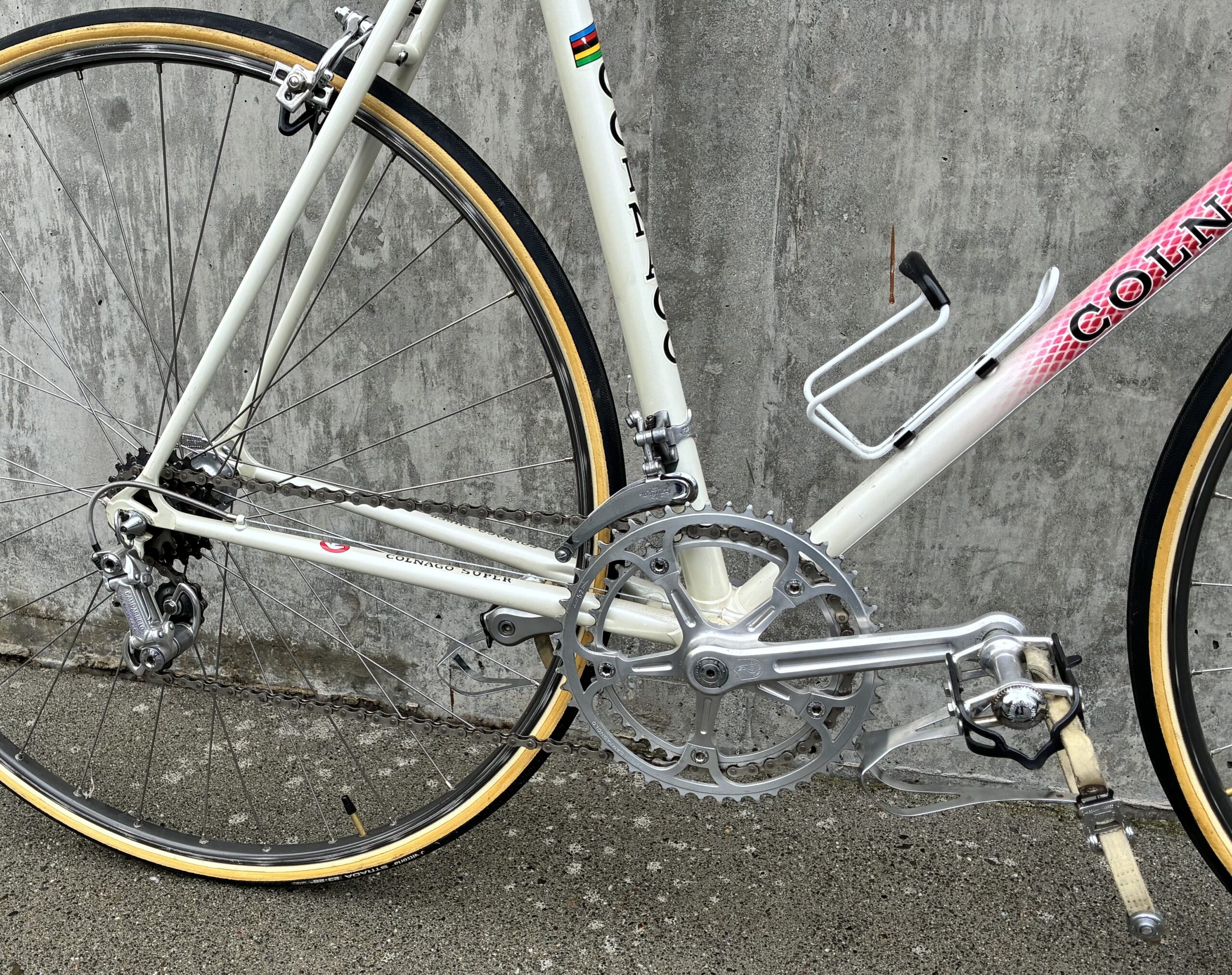
Record Drivetrain
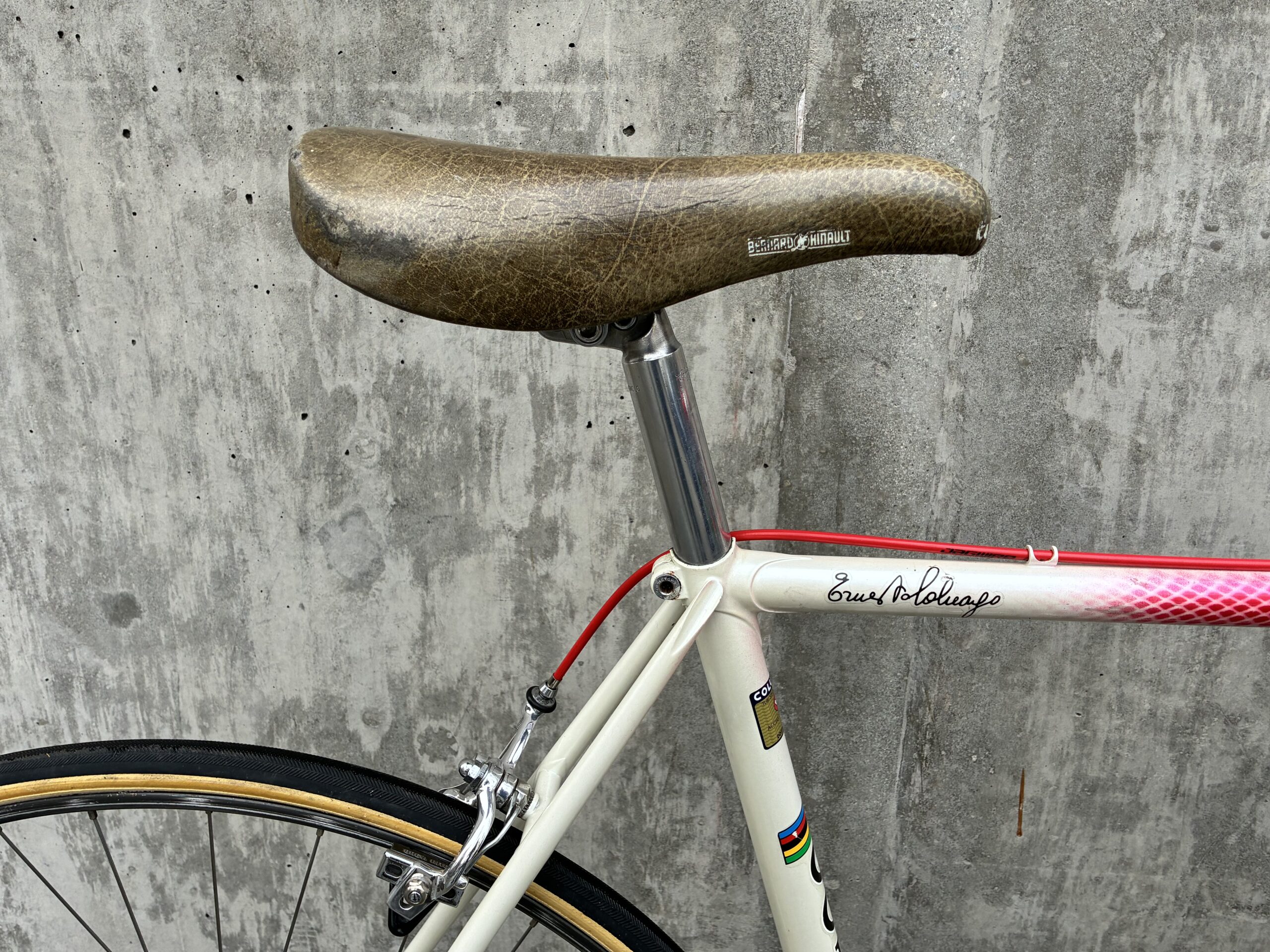
Bernard Hinault Turbo Saddle
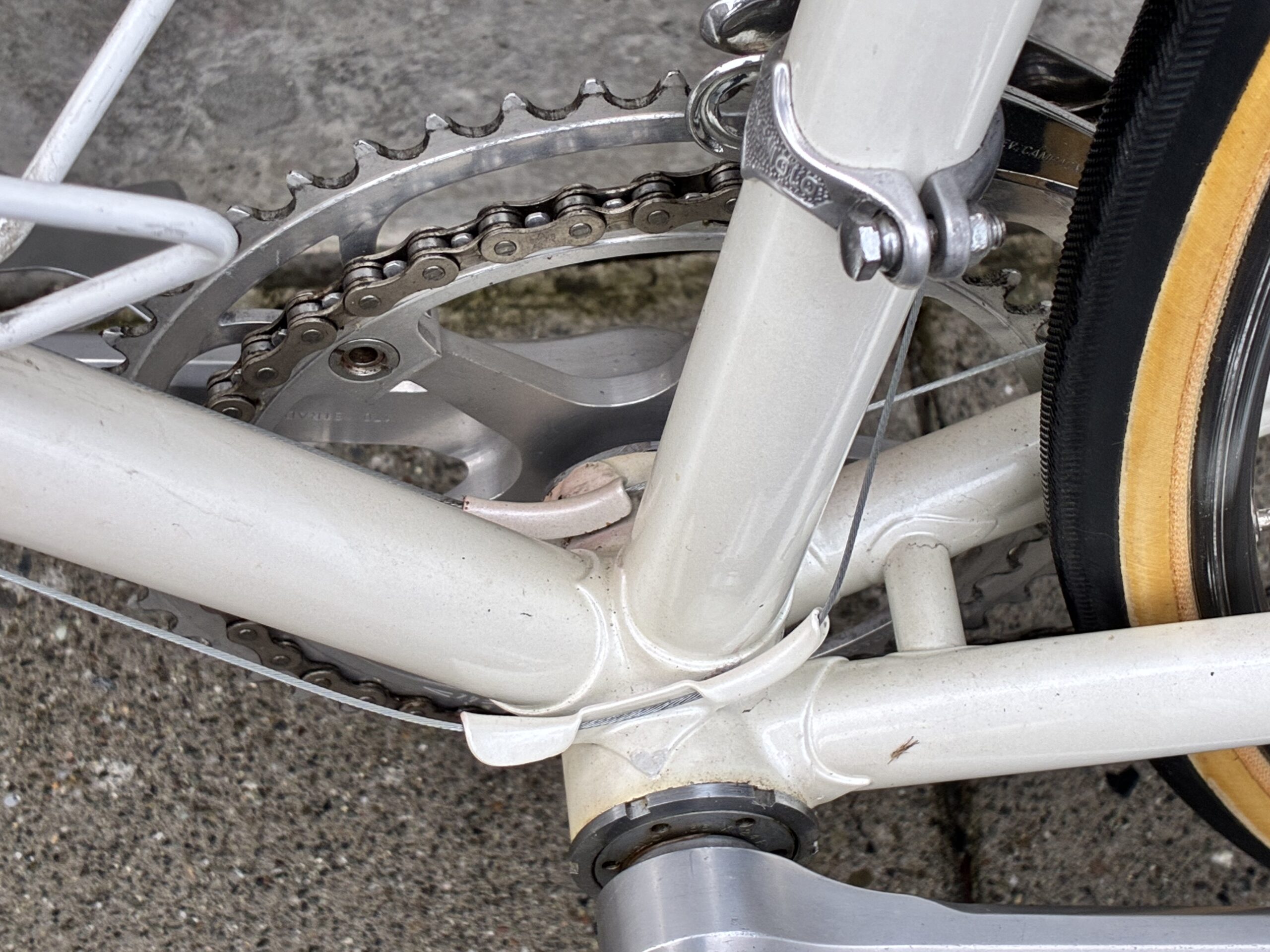
Cable Guides
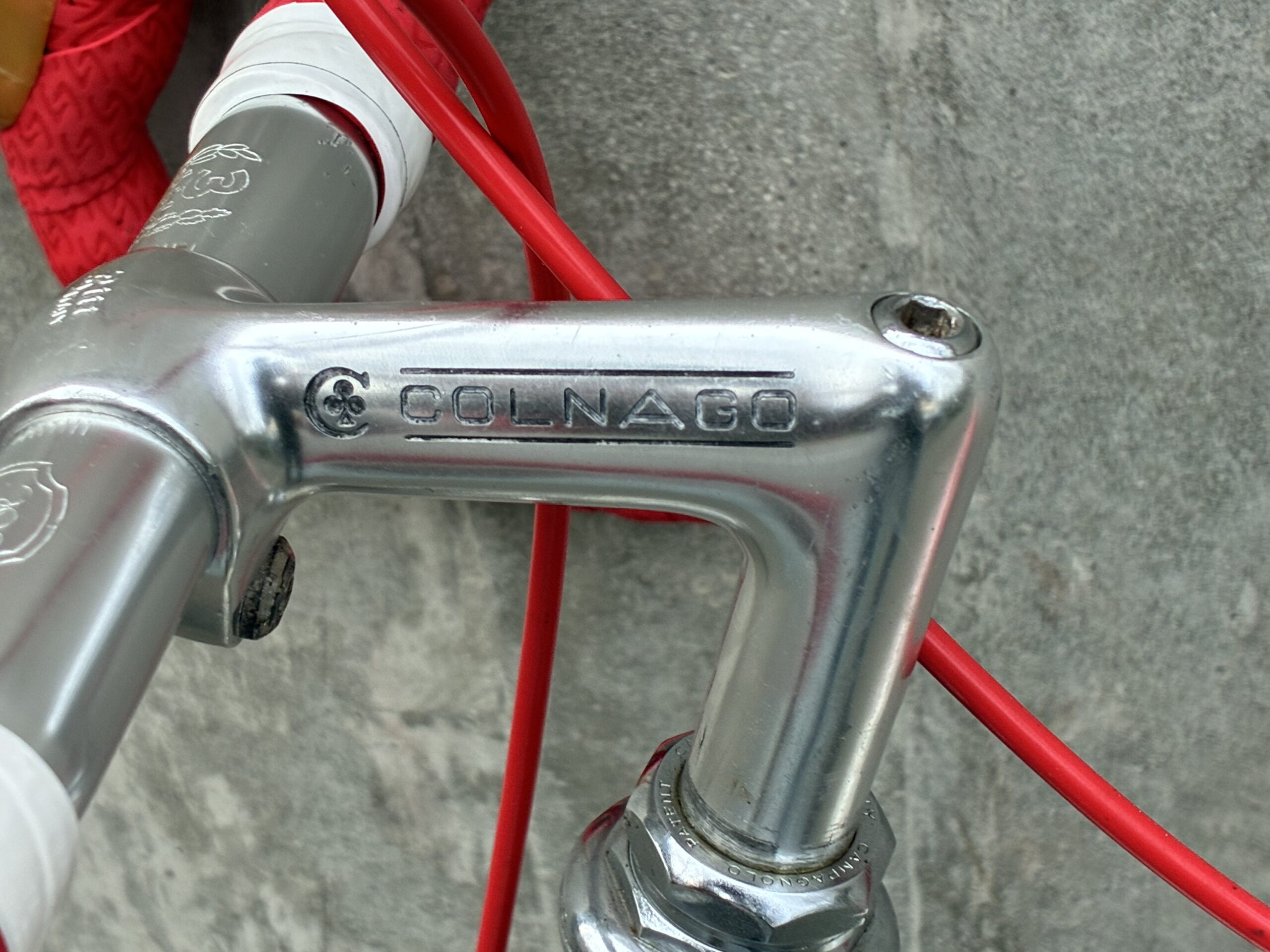
Colnago Pantographed Stem
This Super is more refined than the earliest editions. It has inset brake attachment nuts, it has seat stays with the concave top facing outward which was a little different, and the horizontal rear wheel dropouts are a little shorter and probably lighter than the standard Campagnolo dropouts found on Supers from the ‘70’s.
Another “modern” touch is the beautiful airbrushed grid paint. The paint on this particular Colnago marks it as an ‘80’s bike. Earlier Supers were solid colors, sometimes with a contrasting painted panel. Those are the changes, yet there are still some features common with the earliest versions like the Columbus SL tubing, the flat-crown fork and the single water-bottle mount. Unlike most bikes newer than the ‘85 model year, this still has the cable guide that runs the shift wires over the top of the bottom bracket area.
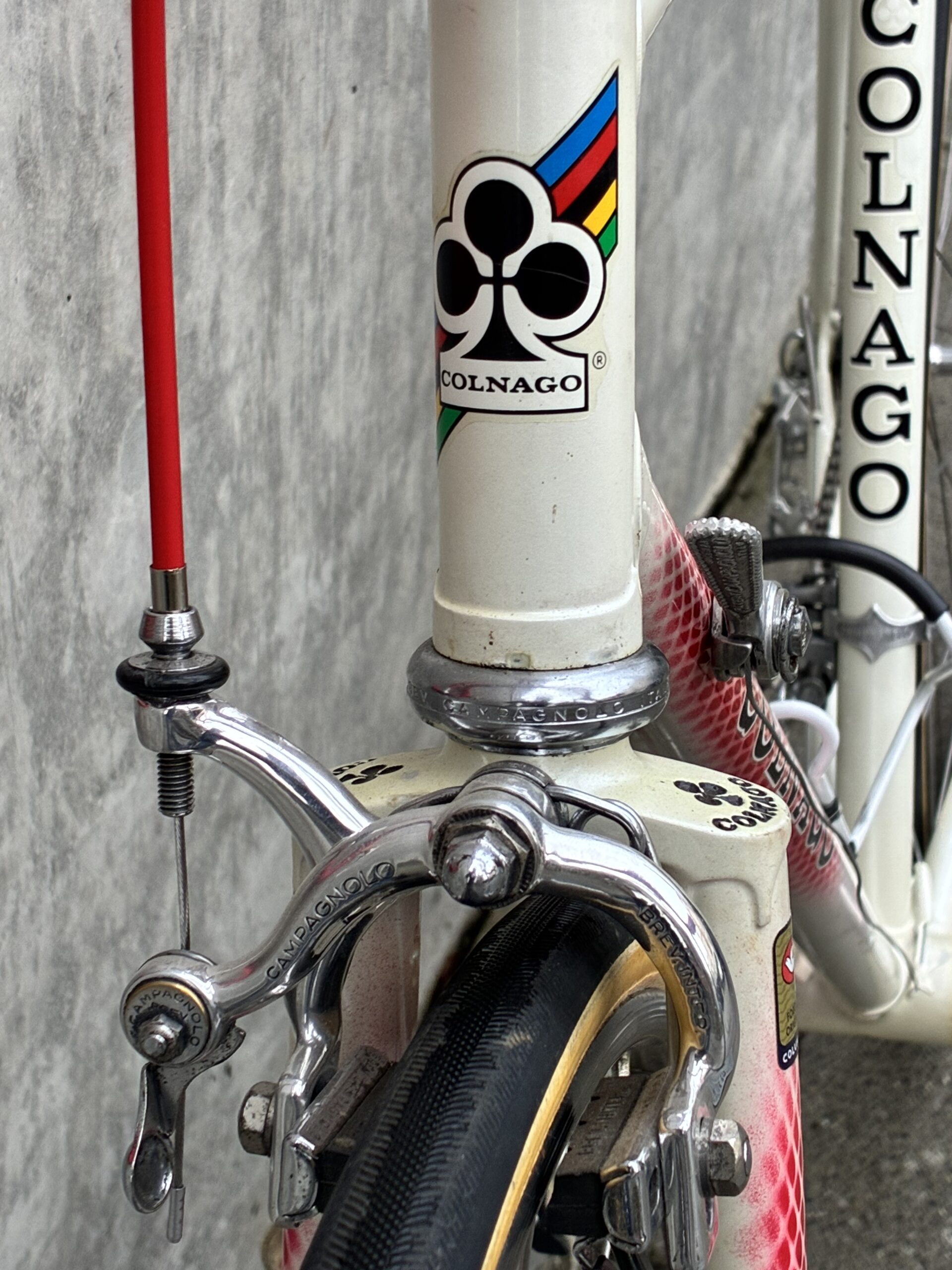
Flat Crown Fork

Bottom bracket cut out

Semi-sloping fork crown on an ‘87 Super

1974 Molteni team Colnago Super

1973 Colnago Super
The Super looks like a normal old racing bike, but a lot of the things that made it special weren’t easy to see, like the clover-shaped cutout vent in the bottom bracket shell that acted to prevent rust inside the tubes. Some design elements, like the head tube angle and fork were characteristics that were only evident when found lacking in other bikes.